

Tasting · 5 min read
What the tears really tell you.
Swirl a glass and the wine weeps down the inside. It is a lovely piece of physics and it says almost nothing about how good the wine is.
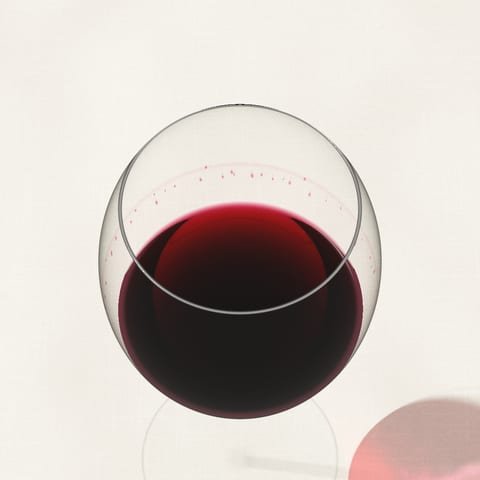
Somebody at the table swirls, holds the glass up to the light and admires the legs, as though the slow streams running down the inside were a certificate of quality. The idea is everywhere. What wine legs mean is far simpler: the wine contains alcohol and the alcohol is evaporating.
The tears, as they are also called, are a small feat of physics. Evaporating alcohol pulls a thin film of wine up the glass and gravity brings it back down in drops. How much alcohol and sugar a wine contains changes how the tears look. How good the wine is does not come into it.
The myth of the quality sign
The myth is easy to understand. Thick, slow tears look rich and rich sounds like quality. Many powerful, ripe wines do show pronounced legs, so the association holds often enough to survive.
The trouble is that the tears respond to alcohol and sugar. Balance, length, complexity and the quality of the fruit, the things that make a wine good, leave no mark on them. A modest wine with plenty of alcohol can show more legs than a great one with less. Judging a wine by its tears is like judging a meal by the steam coming off the plate.
Nor is the effect special to wine. Any mixture of alcohol and water can produce it, which is why whisky and brandy drinkers talk about legs too.
The physics behind the tears
The effect was explained in 1855 by James Thomson, an engineer and physicist and the older brother of Lord Kelvin. It is named after the Italian physicist Carlo Marangoni, who studied it for his doctoral thesis ten years later. You will also see it called the Gibbs-Marangoni effect.
The key idea is surface tension: the pull at the surface of a liquid that lets water bead into drops. Alcohol has a lower surface tension than water, so the more alcohol a mixture contains, the weaker that pull. Everything else follows in a loop:
- Wine wets glass, so a thin film creeps up the wall above the surface of the wine, especially after a swirl.
- Alcohol evaporates faster than water. In the thin film, with so little liquid spread over so much surface, the alcohol is quickly depleted.
- As the film loses alcohol, its surface tension rises above that of the wine in the bowl.
- A liquid is pulled towards the area of higher surface tension, so wine is drawn up from the bowl into the film.
- The rising wine gathers in a ridge near the top of the film. When the ridge grows too heavy, gravity wins and it breaks into drops that run back down: the tears.
Evaporation also cools the film. A cooler liquid has a higher surface tension, so temperature adds to the pull. A 2015 study that separated the alcohol and temperature effects found them comparable in size. Physicists are still refining the details; a 2020 paper showed how gravity shapes the climbing film into tears. Thomson's core explanation still stands.
What makes the legs more pronounced
Because the tears depend on evaporation and on how easily the wine flows, a handful of things change them:
- Alcohol. It drives the whole effect, so wines with more of it generally show more tears, though the link is loose.
- Sugar. Sugar makes wine more viscous, so the tears of a sweet or fortified wine run slower and thicker.
- Glycerol, much less than its reputation. This by-product of fermentation usually gets the credit. It barely evaporates, so it cannot drive the tears. At the levels found in wine it also changes how the wine flows only slightly.
- Temperature. Evaporation is the engine, so the temperature of the wine and of the room changes the show. The same wine can weep differently at a warm table and in a cool cellar.
- The glass. Traces of detergent or grease change how wine spreads over glass, so the same wine can weep differently in two glasses. A clean, plain glass shows the effect best.
What wine legs mean and what they do not
Legs tell you that a wine contains alcohol and, if they are slow and syrupy, perhaps sugar. Beyond that they have little to say: nothing reliable about quality, age or grape variety.
Even as a gauge of alcohol they are crude. The label is more reliable and your mouth is better still, since alcohol shows itself as warmth at the back of the throat.
Blind tasters do sometimes glance at the legs, but only as one weak clue among many. More alcohol hints at riper grapes, since fermentation turns the grapes' sugar into alcohol. Riper grapes in turn hint at a warmer place or year. That chain of reasoning is worth something only when the mouth confirms it. On its own, a glass full of tears proves nothing.
Legs tell you that alcohol is evaporating, not that the wine is any good.
If you want to judge a wine, spend your attention where the information is. Its acidity, tannin, balance and length tell you far more than anything running down the glass; why acidity keeps a wine alive is a good place to start. Tasting wine in four steps puts the legs in their proper place: a glance while you look at the colour, then on to the nose.
An experiment for the dinner table
You can prove the physics at your own table. Pour a glass, swirl it, then hold it still at eye level against a light background. Watch the film rise, the ridge gather near the top and the first tears begin to fall. Then cover the glass with a small plate or a coaster. The air trapped above the wine soon fills with alcohol vapour, evaporation stalls and the tears die away. Lift the cover and they return.
For a second demonstration, swirl some water in a clean glass. It drains away without forming tears, because there is no alcohol to evaporate. For a third, pour a dry white and a sweet, fortified wine side by side: the extra alcohol and sugar in the second show up as slower, heavier tears.
The glass at the top of our home page is drawn from the same physics: set it swirling and the wet line climbs the wall, then drains back in slow tears. If anyone at the table still insists that legs mean quality, the point comes up among the beginner questions in our free wine quiz.
What to do with the tears
Enjoy them. They are one of the small pleasures of a good glass and a neat piece of physics in plain sight.
If the tears are thick and slow, expect a wine with plenty of alcohol or sugar. Check the label, especially if you are pacing yourself through a long dinner. Then move on to the nose and the mouth, which is where a wine's quality is actually decided.