

Serving · 6 min read
Choosing a glass without the hype.
A good glass matters. A cupboard of grape-specific shapes does not. What makes a glass work is simple and one shape covers almost every wine you will open.
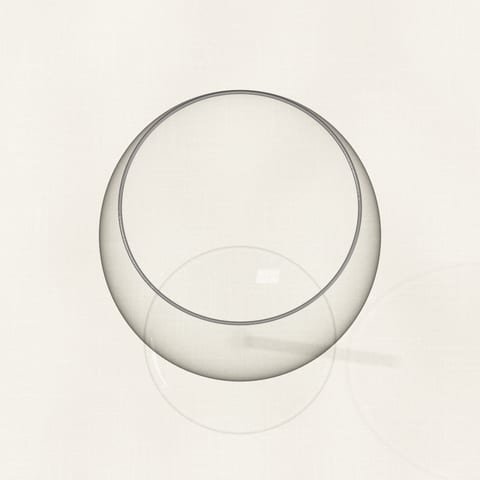
The common mistake is to spend on a cupboard of grape-specific shapes while the glass you reach for every day is thick, tinted or too small. So does wine glass shape matter? Up to a point, yes. A clear, thin glass with a bowl big enough to swirl and a rim that narrows towards the top makes almost any wine show better. Beyond that point, the differences between well-made shapes are small.
They matter less than a clean glass, a sensible pour or the right temperature. Glassware is one of the few corners of wine where spending on fewer shapes usually gives a better result. Buy one good shape, buy enough of it and look after it.
What matters in a wine glass
Five things do most of the work.
- Clear, plain glass. Colour tells you about grape, age and condition. Tinted, cut or engraved glass hides it.
- A thin rim. The wine arrives cleanly instead of over a thick lip and the glass feels lighter in the hand.
- A bowl big enough to swirl a small pour. Swirling releases aroma. A small glass filled to the brim cannot do it.
- A bowl that narrows towards the rim. The taper holds the aromas above the wine instead of letting them drift off, so they meet your nose when you lift the glass.
- A stem. You hold the glass without warming the wine or smearing the bowl. Temperature changes a wine far more than shape does, as the guide to serving temperature explains.
A good glass need not be expensive or elaborate. The international standard tasting glass, defined by ISO in 1977, is an egg-shaped bowl on a stem, in clear, colourless glass, narrower at the opening to concentrate aroma and designed for a 50 ml pour. It is plain, modest and entirely fit for serious tasting. A neutral glass like it is what you want when you compare wines, as in a simple tasting method.
Why wine glass shape matters less than the marketing says
The case for a different glass for every grape has sometimes rested on the idea that a rim can direct wine to the part of the tongue best suited to it. That idea leans on the old tongue map, which placed sweet, sour, salty and bitter on separate zones. The map is a myth: every part of the tongue with taste buds can detect all the basic tastes.
Shape does affect aroma. Sensory studies have found that the same wine smells different from one glass to another. Imaging work has also shown alcohol vapour gathering in different patterns above the wine depending on the bowl. It does not follow that every grape needs a glass of its own. If a specialist glass gives you pleasure, enjoy it. It is not a requirement and it will not rescue a wine served too warm in a glass that smells of the cupboard.
A good all-purpose glass beats six specialised ones.
A sensible set
For most homes, three shapes are the most you need and one is enough to start.
- One all-purpose glass for red, white and sparkling: a tulip-shaped bowl of moderate size with a thin rim. Buy more than you think you need, because glasses break and dinners grow.
- A larger bowl, if you want a second shape, for Burgundy, other Pinot Noir and old reds. Delicate, layered aromas have more room to open.
- A small glass for Port and Madeira. Both are poured in smaller measures, which look lost in a large bowl. The standard tasting glass does the job well. Sherry shows its aromas best in the all-purpose glass.
Before you buy, check the size. A standard pour of 125 to 150 ml should fill no more than a third of the bowl, which points to a glass that holds around 400 to 450 ml or more. For a large dinner, hiring glasses is usually easier than owning four dozen. For a boat trip or a picnic, sturdy stemless or unbreakable glasses make sense; save the fine ones for the table.
Champagne belongs in a wine glass
The narrow flute shows off the bubbles and hides the wine. There is little room for aroma to gather and none to swirl. The wide, shallow coupe fails the other way, letting bubbles and aromas escape quickly.
A white wine glass or a tulip that narrows at the rim gives Champagne room to show its aromas while keeping the bubbles lively. It suits vintage and mature Champagne best of all, since their depth is easy to miss in a flute. What the label tells you about age and style is set out in how to read a Champagne label.
In a restaurant it is perfectly normal to ask for a white wine glass for your Champagne. The same goes for a larger bowl for an old red, if the restaurant has one.
How much to pour and how many glasses
Fill a glass a third full at most. The empty part of the bowl is where aroma collects and it lets you swirl without spilling. For a tasting, pour less still. How clean a glass is also changes how wine clings to its sides, which is one reason the tears on a glass look different from one glass to the next.
At a dinner, the ideal is one glass per wine per guest, so people can go back and compare. The workable minimum is one glass for every wine on the table at the same time, usually two, plus a water glass. Two glasses let guests compare a white with a red or two reds side by side without finishing one wine to make room for the next. Quantities, order and pacing are covered in planning a wine dinner.
Washing and storing
A glass that smells of anything spoils what you pour into it. The smell usually comes from the cupboard or the sink.
- Wash in hot water with no scented detergent. If you need one, use the smallest drop of an unscented detergent and rinse thoroughly. Scent and residue end up in the wine.
- Polish while the glass is still warm, with a lint-free cloth. Hold the bowl rather than the base, because twisting the bowl against the base is how stems snap.
- Store glasses upright. A glass stood on its rim traps stale air and rests its weight on its thinnest edge.
- Keep them away from cooking smells. In a compact Hong Kong flat, where the kitchen is rarely far away, a cabinet in the living room beats one beside the stove.
- Smell the empty glass before a dinner. A musty cupboard or cardboard smell is easy to mistake for a corked wine. A splash of the wine you are about to serve, swirled and tipped out, rinses the glass the way many sommeliers do.
A dishwasher is fine for sturdy everyday glasses, provided they come out free of any film of detergent or dishwasher salt, which can taint the wine and flatten the bubbles of a sparkling one. Thin, fine glass lasts longer washed by hand.
The short version
Buy enough of one good all-purpose glass for your largest dinner and keep every one of them clean and free of smells. Pour a third at most, hold the stem and spend the difference on what goes into the glass. A blind tasting makes the same point from the other side: everyone drinks from the same neutral shape, so the wine is the only thing left to judge.