

Regions · 5 min read
Nebbiolo at its most serious.
Barolo and Barbaresco share a grape and neighbouring hills but follow different ageing rules. Here is what separates them and why both reward patience.
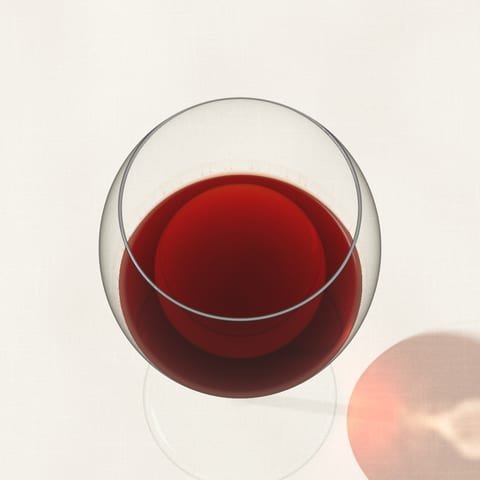
Most comparisons of Barolo vs Barbaresco stop at a cliché: power against grace. It is a fair first sketch and a poor guide to buying. Both wines are 100% Nebbiolo from the Langhe hills of Piedmont, on either side of the town of Alba. Barolo must age longer before release and is often the firmer of the two. Barbaresco comes from a smaller area and is often approachable a little earlier. Yet the producer, the village and the vintage move a bottle further than the name of the appellation does.
What unites the two matters more than what separates them. Both are built on a grape that looks gentle in the glass and grips hard on the palate. Both reward a patience that most bottles never receive.
Nebbiolo: pale in the glass, firm on the palate
Nebbiolo is the great deceiver of red wine. Its colour is pale, often garnet with an orange tinge at the rim even in youth. Anyone who judges it by eye expects something light. Then the structure arrives: high acidity and high tannin, the kind that dries the gums and asks for food. That contrast between a pale colour and a firm structure is often the clue that gives Nebbiolo away when it is poured blind. Tannin explained covers why the grip matters and how it softens with time.
The aromas are as distinctive as the structure. Roses, tar and red cherry are the classic trio. With age come dried flowers, earth and leather, while the tannin softens and the fruit recedes. Few grapes age more gracefully, which is why good Barolo and Barbaresco rank among the most age-worthy red wines in Europe.
Pale Nebbiolo is not light Nebbiolo: judge it by its grip, not its colour.
Barolo: eleven communes, many styles
Barolo is made in 11 communes, among them La Morra, Barolo, Castiglione Falletto, Monforte d'Alba and Serralunga d'Alba. The wine must be 100% Nebbiolo with at least 13% alcohol. Within that frame the range is wide, because the communes differ in soil, altitude and exposure.
A widely repeated generalisation holds that La Morra gives some of the most perfumed, approachable Barolo, while Serralunga d'Alba gives some of the firmest and slowest to open. Treat it as a starting hypothesis rather than a rule, since a producer's choices can outweigh the commune. Two Barolos from different communes, from the same producer and vintage, poured side by side, make one of the clearest lessons in what terroir really means.
Barbaresco: smaller and often readier
Barbaresco comes from the communes of Barbaresco, Neive and Treiso, plus part of the commune of Alba. Like Barolo it is 100% Nebbiolo, with a slightly lower minimum of 12.5% alcohol. The area is much smaller, so there is less of it to go round. Its wines are often more approachable earlier than Barolo, though the best still need years in bottle.
The difference in style is real but modest. A Barbaresco from a firm vintage and a traditional producer can be sterner than a Barolo from a supple vintage. If you are choosing between the two for a particular dinner, the vintage and the producer will tell you more than the appellation.
Barolo vs Barbaresco on the label
Each carries DOCG on the label, the highest category of protected origin in Italian wine. Both also write patience into law. Barolo must age at least 38 months before release, 18 of them in wood. Barolo Riserva needs at least 62 months, again with 18 in wood. Barbaresco must age at least 26 months with 9 in wood; Barbaresco Riserva needs at least 50 months, also with 9 in wood.
These are minimums and many producers age their wines longer before release. As with Rioja's ageing ladder, the rules set the least time a wine must spend in the cellar.
The name after the appellation is the other thing to read. Since 2010, Barolo has had 181 official additional geographical mentions (MGAs): 170 named areas plus the 11 communes. These are the vineyard and village names you may see on labels after the word Barolo. Barbaresco defined more than 60 of its own in 2007. An MGA is often shared by several producers, so the same name can appear on very different wines. A bottle with no MGA may be a blend of several sites, the traditional way to make Barolo and no sign of lesser quality.
Many producers of both also make a Langhe Nebbiolo from the wider Langhe area, usually released younger. It is a sensible way to learn a producer's style before you commit to their Barolo or Barbaresco.
Traditional and modern
The argument that once divided the region took place in the cellar. Traditionalists leave the wine on its skins for long macerations and age it in large old casks, which give little oak flavour. Modernists use shorter macerations and small new barrels, aiming for softer early tannin and a clear note of oak. Today most producers sit somewhere between the two, borrowing from both.
The label rarely says which approach a producer takes, so ask your merchant or read the producer's own notes. It matters because it shapes when the wine is ready as well as how it tastes: a traditional Barolo can stay austere for years, while a modern one may give pleasure sooner.
When to open and how to serve
Patience comes first. Good Barolo and Barbaresco often need ten years or more to show their best, with Barbaresco sometimes a little quicker. Opened young, they can taste of little but tannin and acidity. Which wines improve with age explains why this structure lasts. Vintage shifts the timing too. Northern Italy is one of the places where the year matters: a cool season usually gives a firmer, more acidic wine that needs longer than one from a warm year.
- Decant young bottles a couple of hours before serving and taste as you go. Air softens the first impression of the tannin.
- Handle old bottles gently. Stand them upright to settle the sediment, then decant shortly before serving, since fragile old wine can fade quickly in the air. Decanting wine explains how.
- Serve at 15 to 18°C in a large glass. In a warm Hong Kong flat that means 15 to 20 minutes in the fridge before opening.
- Serve with food. Braised meats, mushrooms and truffles are the classic partners. Salt and the richness of a slow braise soften the tannin, while earthy flavours meet the wine's own. In the Langhe itself, think of beef braised in red wine or, in autumn, white truffle shaved over fresh egg pasta.
If you are buying to drink soon, look for a Barolo or Barbaresco that already has a decade in bottle. These are among the wines most worth buying with age already on them, provided the storage history is clear, because someone else has done the waiting. A Langhe Nebbiolo from a producer you trust is the other good answer. If you are buying to keep, buy several bottles of one wine, store them well and open the first at around ten years. We source young and mature Nebbiolo with the storage history to match.